A new ground station has been completed in Otaniemi
1 December 2023
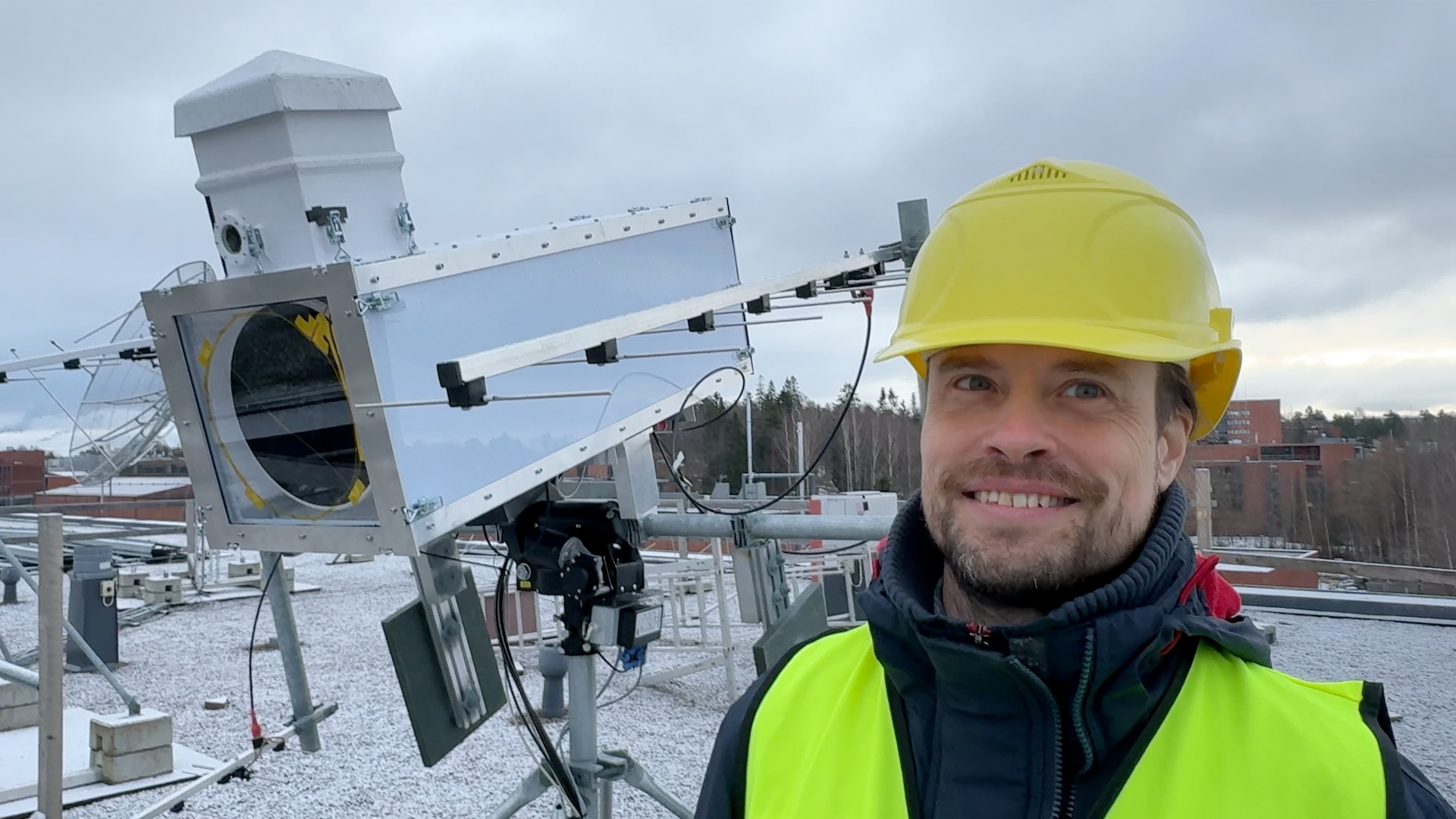
On the roof of the red-brick building located at Maarintie 8 in Otaniemi, there is now an additional antenna structure. Previously, on the roof of this building, largely occupied by the School of Electrical Engineering, there was an antenna for the Aalto-1 satellite and a large dish antenna originally built for the Aalto-1 ground station.
In addition to Aalto-1, the original ground station has also served as the communication point and command center for the Suomi 100 satellite. As the antenna and ground station are also used for student projects and various research purposes, a second antenna was built for the Suomi 100 satellite.
This allows important observational data to be downloaded for researchers even when the primary antenna is out of service.
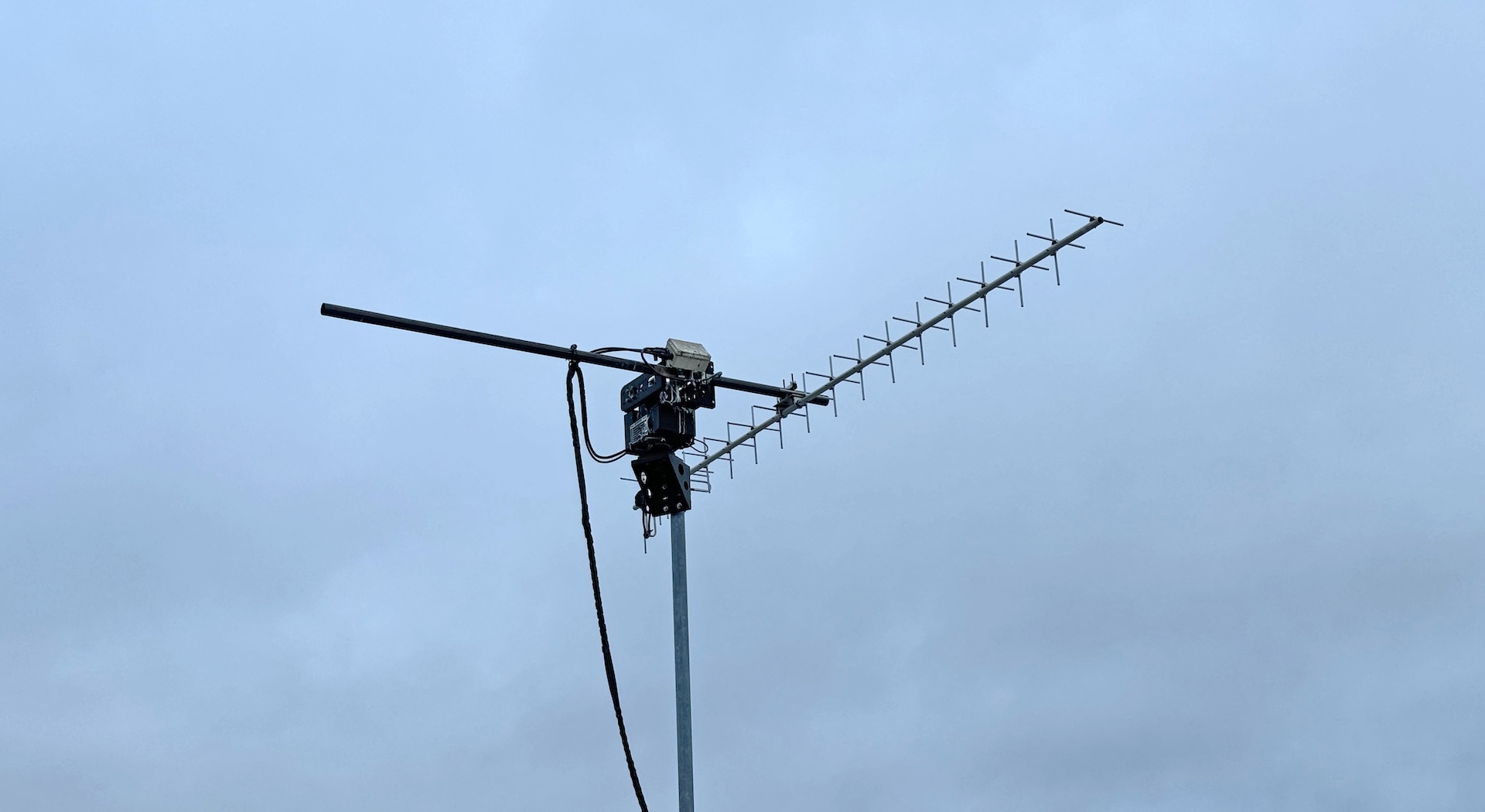
The new antenna is a massive-looking facility, as it features not just one but four Yagi antennas in a common structure, controlled by motors under the guidance of the ground station.
The use of four antennas improves the satellite connection.
In the center of the antennas, there is also a cylinder revealing a telescope inside. It is a ten-inch Celestron used by advanced stargazers, with a main mirror diameter of about 25 cm, equipped with a high-quality CCD camera at the eyepiece.
Olli Knuuttila, responsible for installing the telescope, explains that the telescope will be used to test methods for detecting and imaging space debris. The equipment was completed this week when the final parts were installed.
"Suomi 100 satellite is too small for us to see with this equipment, but we can detect and observe debris, such as rocket stages orbiting Earth," says Knuuttila.
The observing conditions for the telescope in Otaniemi are not optimal, but the equipment is well-suited for research on observation techniques and methods. Objects brighter than magnitude 7 can typically be seen, and good observations can be made for objects brighter than magnitude 5.
This means nearly 700 satellites and cataloged space debris objects per night. There is a considerable amount of objects orbiting Earth nowadays, and the goal is to reduce the amount of hazardous debris. To achieve this, debris must be detected and mapped.
Joonas Niittyniemi collaborated with Knuuttila in building the new ground station and its telescope.
Daily communication is maintained with the Suomi 100 satellite, which functions excellently. The signal transmitted by the satellite can be listened to by anyone worldwide, but commands can only be sent and telemetry data received in Otaniemi—or more precisely, through the Otaniemi ground station, as much of the operation is conducted remotely.
There are also online services that allow people to listen to the signal sent by the Suomi 100 satellite through receivers operated by satellite enthusiasts around the world.
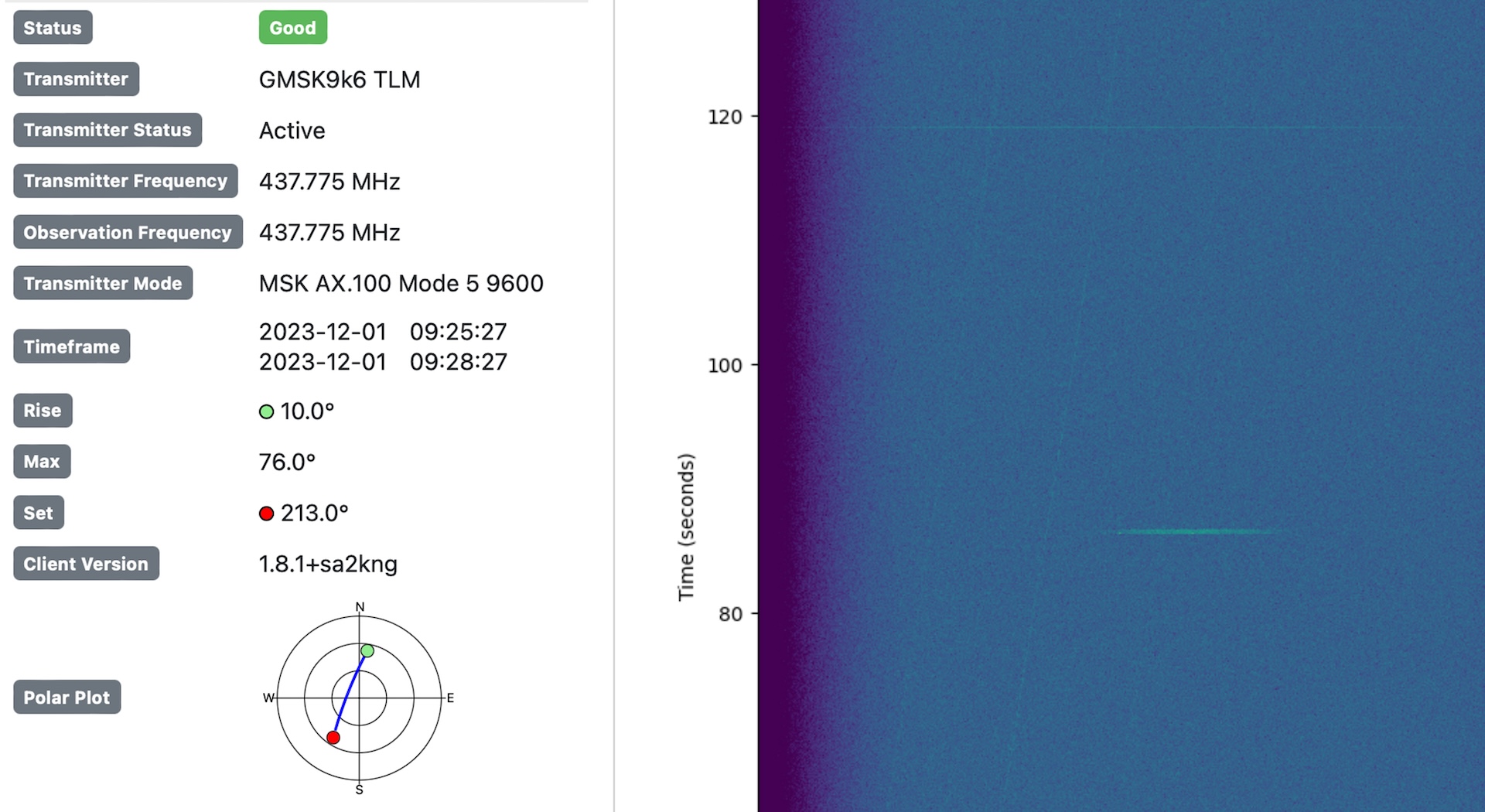
The latest signals from the Suomi 100 satellite are available on platforms such as SatNOGS.